Terminal Learning Objective
Conduct Troop Leading Procedures
In a classroom or field environment, given scenarios, references, and terrain
Officer Candidates will analyze missions, develop plans, and issue orders using the 8-step TLP process, demonstrating tactical and leadership competence as evaluated on the FLER
Evaluation: Field Leadership Evaluation Report (FLER) during STX lanes
Why TLPs Matter
TLPs are a dynamic process used by small-unit leaders to analyze a mission, develop a plan, and prepare for an operation.
TLPs enable leaders to:
- Maximize available planning time
- Develop effective, executable plans
- Prepare their units for success
- Adapt when the situation changes
FM 6-0, para 10-2
The 8 Steps
ATP 3-21.8, Chapter 2
How You'll Be Evaluated: The FLER
Throughout this training, you'll see zoomed-in sections from each step of this form.
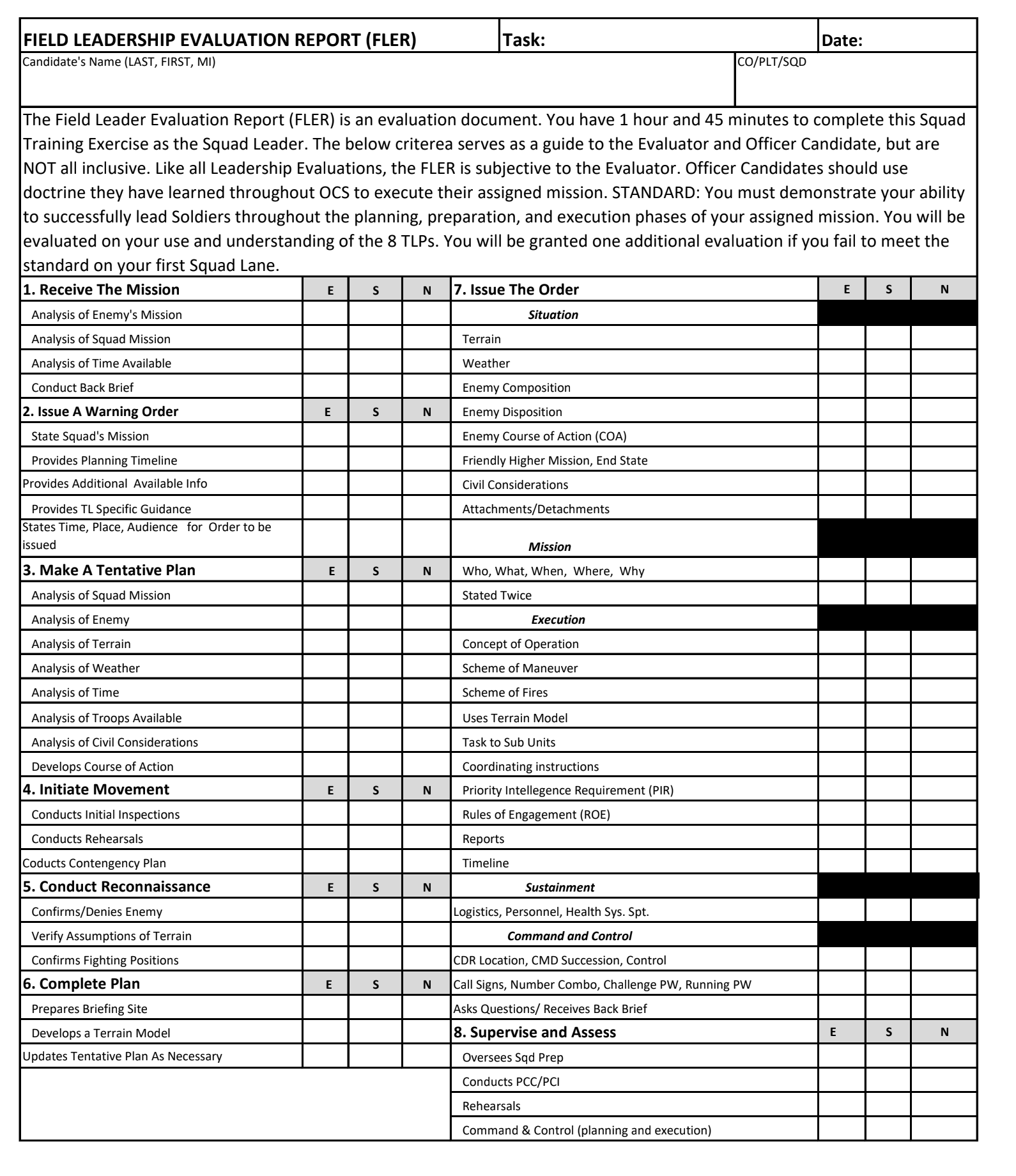
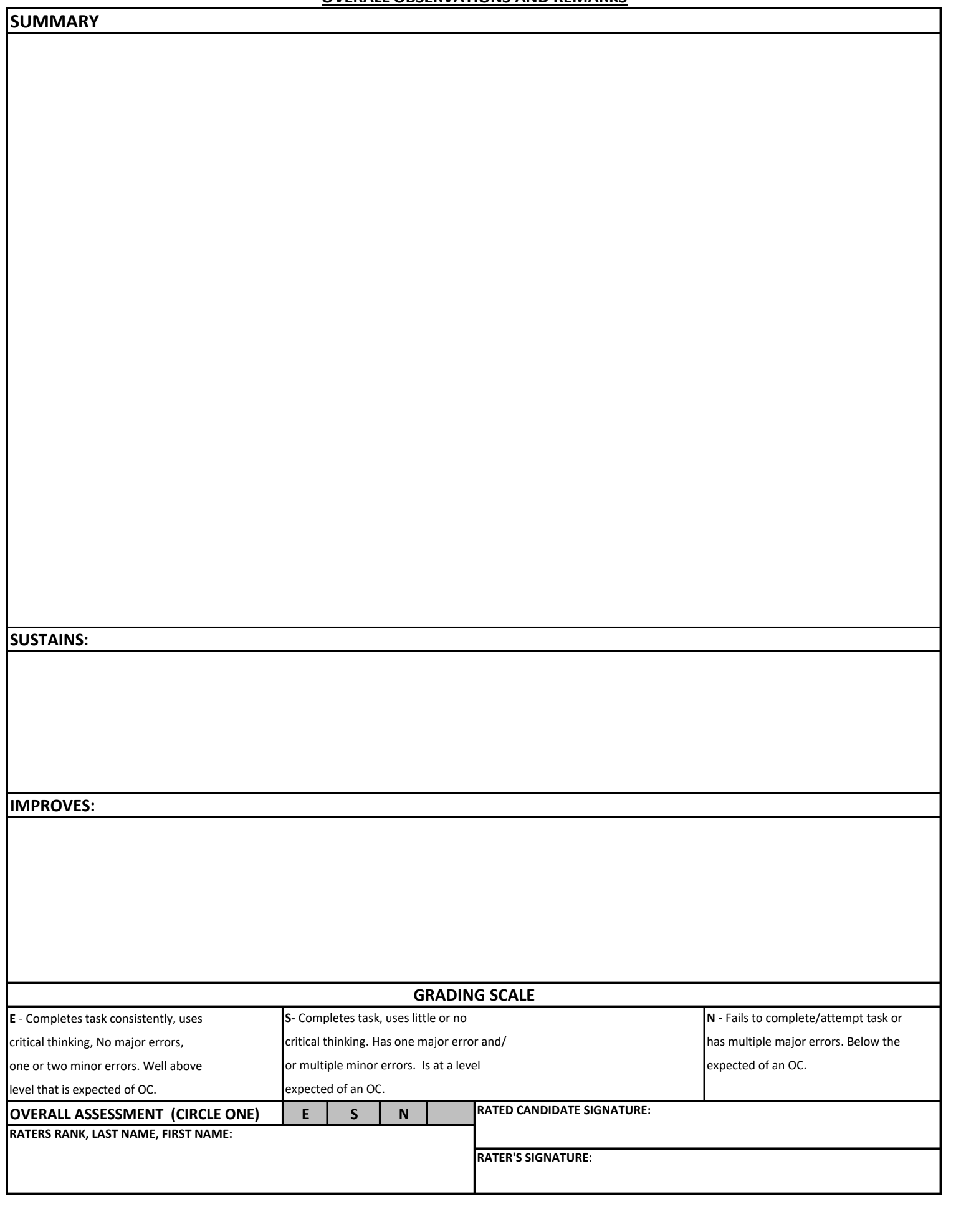
ARNGOCS Form 5 — Field Leadership Evaluation Report
FLER Grading Scale
The Field Leadership Evaluation Report (FLER) is used during field exercises, STX lanes, LRC, and FLRC. You will be rated E/S/N on each TLP step.
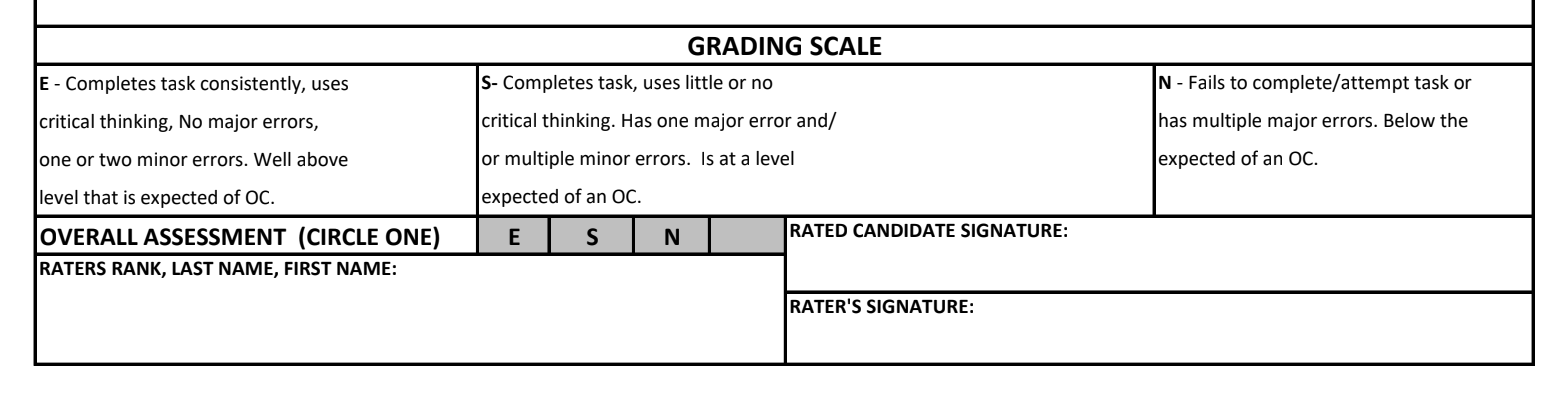
NOTE: All "E" and "N" ratings require written justification. FLER evaluations count toward status advancement.
Platoon Trainer Guide, para 3-8; ARNGOCS Form 5
Understanding Subjective Evaluation
"The LER or FLER assessment is purposely subjective. It relies on the platoon trainer's professional assessment."
This subjectivity allows the platoon trainer to weigh certain areas over others based on their experience and professional opinion of observed behaviors.
A strong performance in one area can offset weakness in another—context matters.
Your performance is evaluated against the standards of a second lieutenant—not in comparison to your peers. The question is: "Would this performance be acceptable from a new officer?"
ARNG OCS Course Management Plan (CMP), Chapter 7
Why We Teach to the Standard
"Are we just teaching to the test?"
The FLER criteria aren't arbitrary checkboxes. They represent the essential information your subordinates need to execute a mission.
Every item on that checklist exists because leaders in combat learned—often the hard way—that missing it gets people killed.
Format matters. When information comes in the expected order, subordinates can process it faster. They know what's coming next and can focus on content, not structure.
Why Steps 1-3 Are Sequential
The WARNORD enables parallel planning (subordinates plan at the same time as you)—they begin preparation while you continue detailed analysis.
If you wait until you complete your tentative plan (Step 3) before issuing the WARNORD (Step 2), you've violated time management and stolen your subordinates' prep time.
1 → 2: Can't issue a useful WARNORD without first receiving and assessing the mission
2 → 3: Don't do detailed COA development until you've pushed the WARNORD
Receive the Mission
You receive your mission through a combat order:
Quick brief on general situation/mission to start planning
Complete plan with in-depth details on how to execute
Changes to an existing OPORD
Orders can be written, verbal, or electronic.
Step 1 FLER Evaluation Criteria
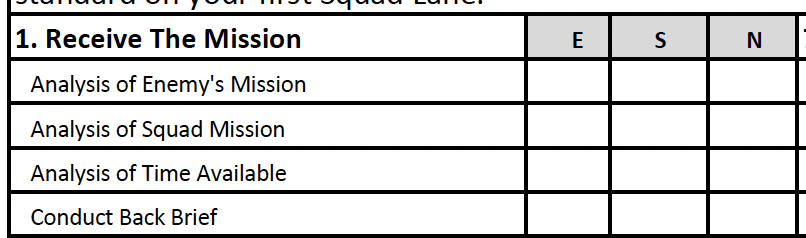
Field Leadership Evaluation Report — Receive the Mission
Time Analysis: Backwards Planning
Start from MISSION COMPLETE and work backwards to NOW.
This ensures you allocate enough time for each phase.
1630 — Seize OBJ NLT (Mission Complete)
1600 — Begin seizure (30 min for action)
1530 — Depart ORP (30 min movement)
1310 — Depart HLZ (2+ hr to ORP)
1230 — Depart PZ (40 min flight/consolidate)
1215 — Arrive PZ (15 min load)
FM 6-0; ATP 3-21.8
Time Considerations: HOPE-W
HOPE-W is a memory aid for time analysis considerations.
What is higher HQ's timeline? When do they need backbriefs, rehearsals, LD?
How long will mission execution take? Movement, actions on OBJ, C&R?
Time for WARNORD, OPORD, rehearsals, PCC/PCI, subordinate planning (1/3-2/3).
FM 6-0; ATP 3-21.8
METT-TC(I): The Mission Variables
Mission variables describe the operational environment. Your METT-TC(I) analysis drives every decision.
Task/purpose from higher; specified, implied, essential tasks
Disposition, composition, strength, capabilities, COAs
OAKOC analysis; visibility, precipitation, temperature
Personnel, equipment, capabilities, strengths/weaknesses
Higher's timeline, your timeline, enemy timeline, 1/3-2/3 rule
ASCOPE: Areas, Structures, Capabilities, Orgs, People, Events
Cyber, media, PSYOP, OPSEC—how info affects the fight
ATP 3-21.8 (2024)
ATP 5-0.1; FM 6-0
Issue a Warning Order
"What do I know? Who needs to know? Have I told them?"
— Gen James Mattis
Issue immediately after initial mission analysis.
Do not sacrifice time to gain more information. Push what you know NOW.
ATP 3-21.8; FM 6-0
Step 2 FLER Evaluation Criteria
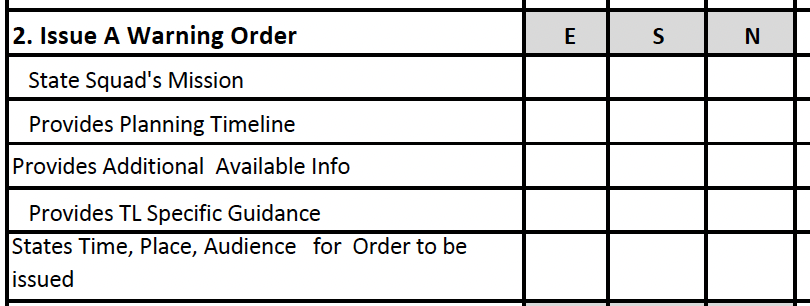
Field Leadership Evaluation Report — Issue a Warning Order
Mission Analysis
Higher HQ Mission, Intent, Concept
Know what your commander and their commander want accomplished
A clear, concise statement of what the unit must do to succeed with respect to terrain, enemy, and desired end-state.
PLs and SLs typically issue KEY TASKS rather than a formal commander's intent.
Constraints from Higher
Look for limits on your freedom of action—things you must do or cannot do.
Task Types: Specified, Implied, Essential
Explicitly stated in the order, overlays, or annexes.
"Secure LZ Helo" • "Search all structures" • "Conduct reconnaissance"
Not stated but required to accomplish specified tasks. NOT SOP or routine tasks.
"Bring LZ marking kit" (from Secure LZ) • "Get graphics from CO" (from Build terrain model)
Must be accomplished to achieve mission success. This becomes your mission statement task.
The task that accomplishes your purpose—what you MUST do.
FM 6-0; ATP 5-0.1
Terrain Analysis: OAKOC
Where can we see/shoot? Where can the enemy see/shoot?
Routes to the objective. Consider friendly and enemy movement.
Terrain giving marked advantage to whoever controls it.
Natural and man-made. What blocks movement?
Cover protects from fire. Concealment hides from observation.
ATP 2-01.3; FM 3-90-1
Enemy Analysis
Disposition
Where are they?
Composition
Who/what are they?
Strength
How many?
Capabilities
What can they do?
Vulnerabilities
Where are they weak?
Doctrine
How do they fight?
ATP 2-01.3
Make a Tentative Plan
This is the longest step. Use detailed METT-TC analysis to develop your course of action.
Analyze Relative Combat Power
Generate Options
Array Forces
Develop COA
Assign Responsibilities
Prepare COA Statement and Sketch
NOTE: Time constraints at squad level often allow only one COA. If so, skip comparison/selection—go straight to war-gaming your single COA. | ATP 5-0.1; FM 6-0
Step 3 FLER Evaluation Criteria
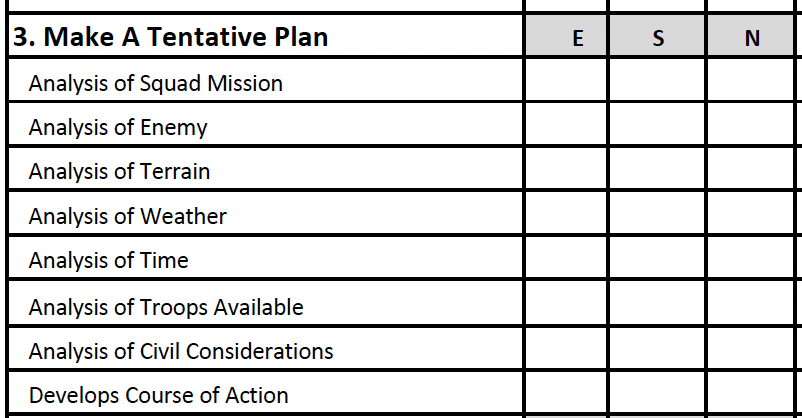
Field Leadership Evaluation Report — Make a Tentative Plan
Decisive Point: The Key to Your Plan
A geographic place, key event, or enabling system that, when acted upon, provides a MARKED ADVANTAGE.
TERRAIN-BASED
Seizure, retention, or control of key terrain that greatly influences the outcome.
TIME-BASED
Causing events to occur at or within a specific time that greatly influences the outcome.
ENEMY-BASED
Destruction or neutralization of an enemy capability that greatly influences the outcome.
AGADAP: Analyze & Generate
Compare your force against the enemy. Look at your Enemy and Terrain analysis—you already did the work!
- Enemy weaknesses
- Friendly strengths
- Enemy strengths
- Friendly weaknesses
Determine HOW you will accomplish the mission. Start with:
- Commander's guidance
- Doctrine (FM 3-90-1 forms of maneuver)
- History and past operations
FM 6-0; ATP 5-0.1; FM 3-90-1
AGADAP: Array & Develop
Determine what forces you need WHERE. Array two levels down.
1. Start with the Decisive Operation
2. Move to Shaping Operations
3. Identify total forces needed
At SQD level: Array teams, key weapons, crew-served
Describe HOW arrayed forces accomplish the mission.
OFFENSE: Movement → Actions on OBJ → C&R (Consolidation & Reorganization)
DEFENSE: EA (Engagement Area) Development → Actions in EA → Counterattack → C&R
FM 6-0; ATP 5-0.1
AGADAP: Assign & Prepare
Assign subordinate units to the groupings of forces.
Considerations:- Span of Control: 2-5 elements per leader
- Unit Type: Match capability to task
- Unit Integrity: Keep teams together
Special teams: Aid & Litter, EPW, Demo, etc.
Create the written statement and supporting sketch for your COA.
The COA statement is a complete summary of your plan that can be briefed quickly.
FM 6-0; ATP 5-0.1
COA Statement Template
"The purpose of this operation is [YOUR UNIT'S PURPOSE]. Decisive to this operation is [DECISIVE POINT]. This is decisive because [WHY it provides marked advantage]. We will accomplish this by conducting [FORM OF MANEUVER]. We will assume tactical risk by [RISK]. We will mitigate this risk by [MITIGATION]."
- Friendly: Unit postured, prepared for next mission
- Enemy: Destroyed, unable to affect operations
- Terrain: Key terrain secured, obstacles reduced
"Purpose: allow unhindered passage of BN DO to OBJ HAMMER. Decisive: seizure of OBJ SAW East—prevents direct/indirect fires on BN DO. Form of maneuver: envelopment. Risk: moving across open terrain. Mitigation: IDF suppression and obscuration." | ATP 5-0.1
War-Gaming Your Plan
PURPOSE: Find weaknesses in your plan BEFORE the enemy does.
ACTION → REACTION → COUNTERACTION
ACTION: What do YOU do? • REACTION: What does ENEMY do? • COUNTERACTION: Your response
MPCOA: Your plan should defeat the enemy's most probable COA.
MDCOA: Have contingencies for the enemy's most dangerous COA.
Branches and Sequels: Contingency Planning
War-gaming reveals decision points. Branches and sequels are your "if-then" plans for those points.
An "if-then" plan for a significant change during execution.
"IF we receive contact before reaching the ORP, THEN we will..."
The plan for what happens after the current operation—success or failure.
"After securing OBJ, we will consolidate and prepare for exfil to..."
Steps 4-6: Interchangeable Based on Situation
Can occur at any point during TLPs. May be conducted by subordinate leaders.
Includes:- Movement closer to LD
- Initial inspections
- Battle drill rehearsals
- SOP items
Confirm or deny assumptions from planning. If recon changes the situation, modify your plan.
Types:- Map recon
- Terrain model
- Aerial photo
- Leader's ground recon
Adjust tentative plan based on recon. Fill in specific details.
Prepare:- Final OPORD
- Overlays
- Fire support plan
- Terrain model/briefing aids
KEY POINT: The WARNORD enables your troops to initiate movement and preparation while you complete planning. Don't wait until you have a complete plan. | ATP 3-21.8; FM 6-0
Step 4 FLER Evaluation Criteria
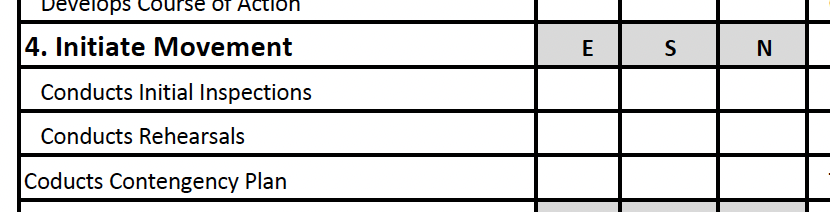
Field Leadership Evaluation Report — Initiate Movement
Step 5 FLER Evaluation Criteria
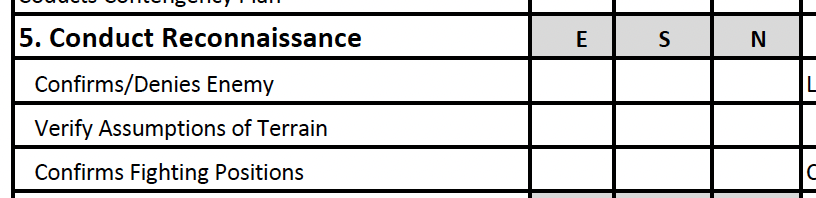
Field Leadership Evaluation Report — Conduct Reconnaissance
Step 6 FLER Evaluation Criteria
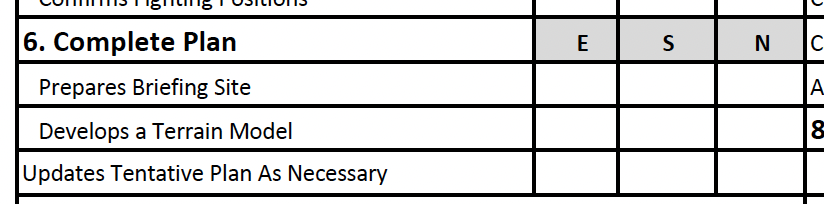
Field Leadership Evaluation Report — Complete the Plan
GOTWA: Before You Leave the Element
Before conducting leader's recon, brief your element using GOTWA.
Grid or terrain feature. "I'm moving to the high ground at grid 123456."
Who accompanies you. "Taking my RTO and 1st Team Leader."
Specific time. "I will return NLT 1430."
Terrain Model Checklist
Your terrain model is a briefing aid. Include everything your subordinates need to visualize the plan.
☐ North Seeking Arrow
☐ Scale (1 pace = X meters)
☐ Current Location / AA
☐ ORP Location
☐ Objective (with grid)
☐ Enemy Positions
☐ Phase Lines
☐ Routes (Primary/Alternate)
Terrain Model Example: D-Day Planning
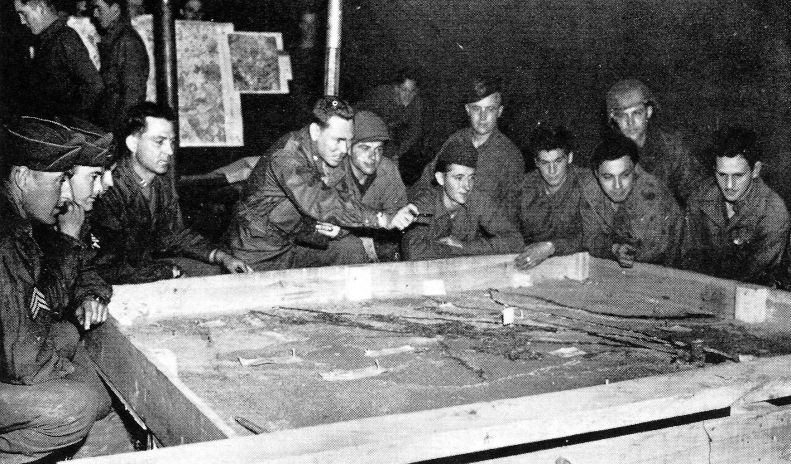
Utah Beach terrain model used for Operation Overlord planning (1944)
Terrain Model Example: Modern Sand Table
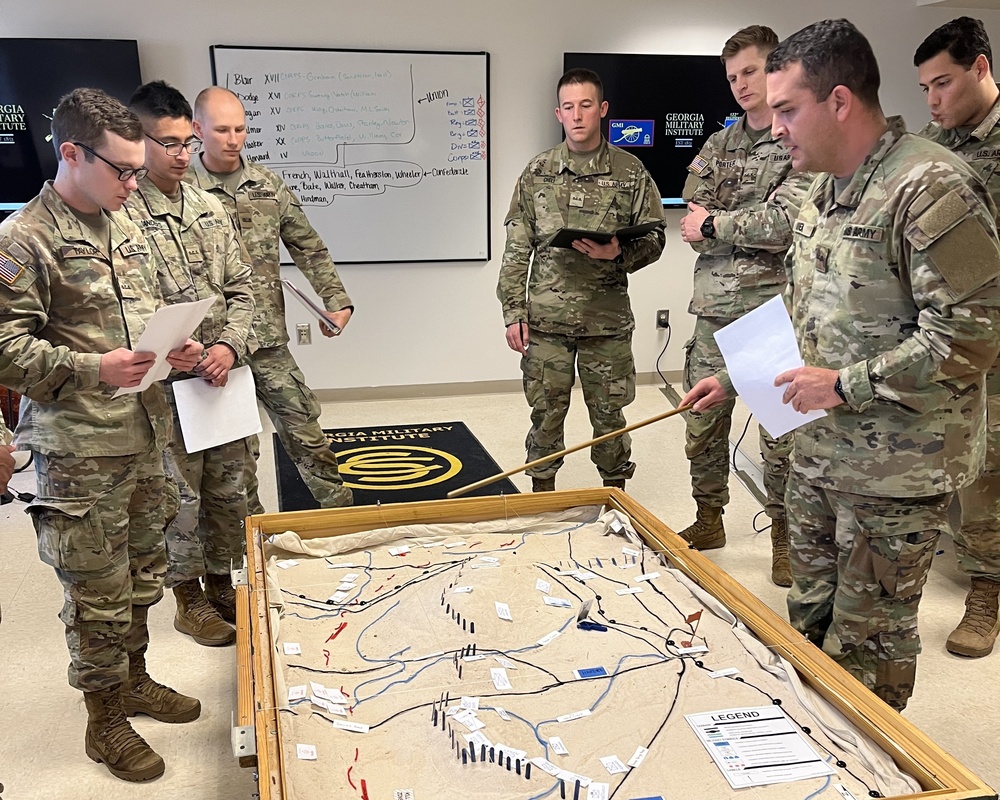
Sand table terrain model for tactical planning and rehearsals
Terrain Model Example: "The Mother of All Sand Tables"

1st Marine Division rehearsals at Camp Matilda, Kuwait (2003)
Issue the Order
- Precisely explain mission and commander's intent
- Clearly communicate concept of operation
- Ensure subordinates know their specific tasks
- Clear — No ambiguity
- Complete — All essential info
- Brief — No excess info
- Timely — Allows prep time
- Authoritative — Delivered with confidence
Step 7 FLER Evaluation Criteria
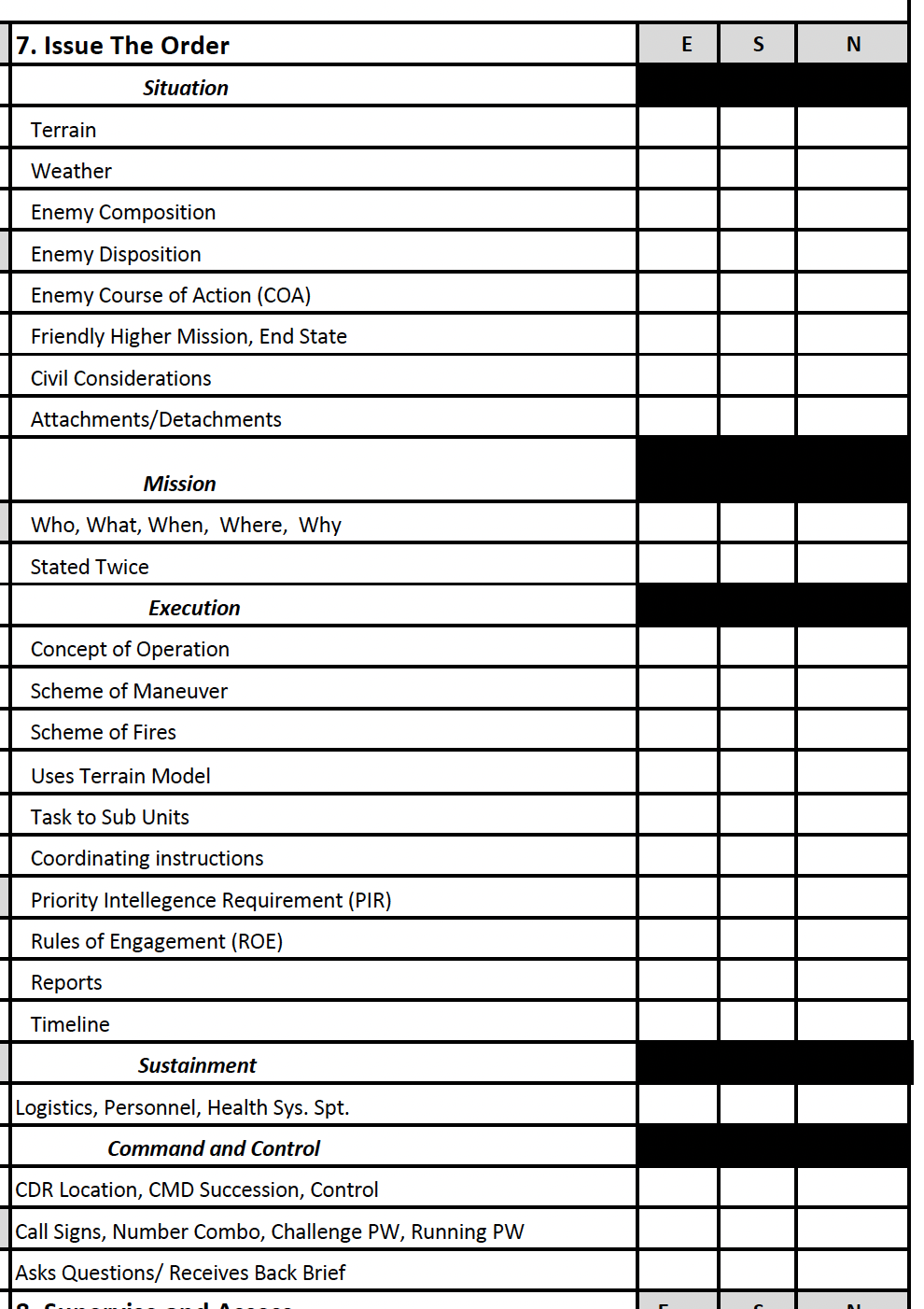
Field Leadership Evaluation Report — Issue the Order (Full OPORD Delivery)
OPORD 5-Paragraph Format: Overview
a. Enemy: Composition, disposition, strength, MPCOA/MDCOA • b. Friendly: Higher mission/intent/concept; adjacent tasks • c. Environment: Terrain (OAKOC), Weather • d. Attachments/Detachments
WHO • WHAT • WHERE • WHEN • WHY
"1st SQD attacks to destroy enemy forces vic OBJ Silver NLT 100500JUL to allow 2nd PLT to seize OBJ Gold."
The most detailed paragraph—covers concept, tasks, and coordination.
a. Logistics: Ammo, water, special equipment • b. Personnel: CASEVAC, EPW handling • c. HSS: CCP location, MEDEVAC
a. Command: Leader locations, succession • b. Signal: Frequencies, running password, challenge/response, lift/shift signals, pyro
After OPORD, SLs brief: Their mission (5 Ws) • Task and purpose • Timeline | FM 6-0
OPORD Paragraph 3: Execution
Para 3 is where you explain HOW you will accomplish the mission.
What success looks like. Key tasks that must happen for mission success.
Decisive Point: What/why • Form of Maneuver: Envelopment, etc. • Scheme: LD to OBJ • End State: Success conditions
DO: 1st Team attacks to... in order to... • SO1: 2nd Team supports... • SO2: 3rd Team security...
FM 6-0; ATP 3-21.8
Coordinating Instructions: What to Brief
SP (Start Point) • LD (Line of Departure) • ORP • Actions on OBJ • Consolidation • Exfil/Return
EPW Team: ___________
Aid & Litter: ___________
Compass: ___________
Pace: ___________
Demo: ___________
RTO/Time: ___________
AA (Assembly Area) • LD • ORP (Objective Rally Point) • OBJ • Phase Lines • Rally Points • Short/Long Halt • Danger Areas
Leadership Presence in Order Delivery
Poor leadership presence during order delivery is a common cause of "N" ratings on the FLER.
Command Presence
- Speak with confidence and authority
- Make eye contact with subordinates
- Project your voice—don't mumble
Technical Proficiency
- Know your plan—don't just read
- Use the terrain model effectively
- Answer questions with competence
Supervise and Refine
This step occurs CONTINUOUSLY throughout TLPs and during execution.
Rehearsals allow you to:
- Practice essential tasks
- Reveal weaknesses in plan
- Coordinate subordinate actions
AT OCS: Even 15 min on the sand table is worth it. Walk through the plan—show movement, positions, coordination.
Step 8 FLER Evaluation Criteria
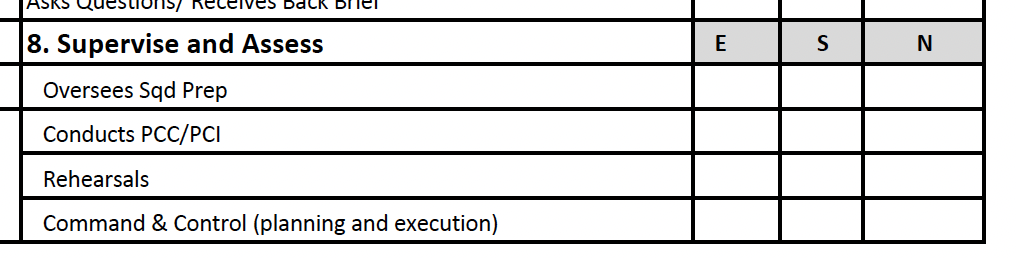
Field Leadership Evaluation Report — Supervise and Assess
Rehearsal Types
Rehearsals ensure everyone understands the plan and their role in it.
Subordinates brief their understanding of the order. Used immediately after OPORD.
Subordinate leaders present their plan to you. Validates understanding and solution.
Integrates all elements—maneuver, fires, sustainment. Walk-through on terrain model.
Report Formats: Quick Reference
Size — How many? • Activity — What are they doing? • Location — Grid or terrain • Unit/Uniform — Who are they? • Time — When observed? • Equipment — What do they have?
Liquid — Water status • Ammo — Ammunition count • Casualties — Personnel status • Equipment — Gear condition
Color code: Green = 100% | Yellow = >50% | Red = <50%
Date/Time • Unit • Size • Activity • Location Grid • Enemy Unit • Time Observed • Equipment • Assessment • Narrative
Common FLER Failures: What "N" Looks Like
- Weak/missing enemy analysis (no MPCOA/MDCOA)
- No terrain analysis products
- Cannot articulate decisive point
- Task without purpose or vice versa
- COA doesn't accomplish mission
- No concept of how elements work together
- Ran out of time with incomplete plan
Thorough enemy/terrain analysis. Clear decisive point with rationale. Complete COA with DO/SO tasks and purposes. Plan defeats MPCOA and accounts for MDCOA.
THE FIX: Practice. Build the terrain model correctly. Know your plan cold. Rehearse your OPORD delivery. Get reps before evaluated lanes. | OCSOP
STX Lane Execution: What to Expect
1 HOUR 45 MINUTES
Total time per evaluation lane
1. Cadre issues PLT-level OPORD to SL candidates + RTOs
2. You receive the mission and begin TLPs
3. Issue WARNORD, conduct analysis, develop your plan
4. Issue your squad OPORD using terrain model
5. Execute the mission
Training Progression: Building to SLX
We build your TLP competence using a crawl-walk-run methodology. Each step increases complexity.
CRAWL
Classroom
Learn 8 steps, METT-TC, order formats. PEs.
WALK
Terrain Model PE
Practice plans and orders. No time pressure.
WALK+
Leader's Recon PE
Integrate recon. Adjust plans on ground truth.
RUN
STX Lanes
Full TLP under time. FLER evaluation.
March FTX — 48+ hours of continuous tactical operations demonstrating mastery of TLPs
KEY: Use every training opportunity. PEs are where you make mistakes and learn. Evaluated lanes are where you demonstrate competence. | OCS POI
Summary: Key Takeaways
"TLP are not a hard and fast set of rules. Some actions may be performed simultaneously or in an order different than shown. They are a guide being applied consistent with the situation and experience of the platoon leader and his subordinate leaders."
— ATP 3-21.8 (2024)
Receive → WARNORD → Plan → Movement → Recon → Complete → Order → Supervise
Your planning uses 1/3 of time; subordinates get 2/3 for their planning and preparation.
Step 3 (Analysis) and Step 7 (Order Delivery). Know your plan. Deliver with confidence.
References: ATP 3-21.8 (2024) | FM 6-0 | ATP 5-0.1 | ADP 6-22